
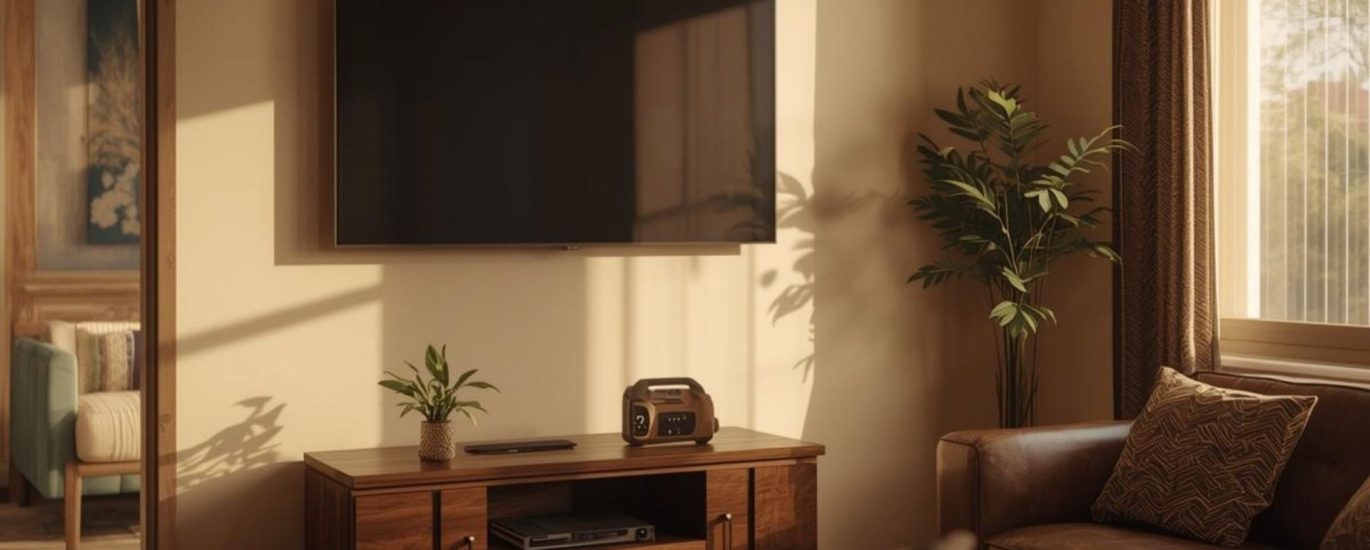
Buying a new television is exciting — until you get it home and realize it swallows your entire parlour or looks like a tablet sitting on your wall. If you have ever walked into a friend’s house in Lagos, Abuja, or Port Harcourt and thought, “This TV is too big for this room,” or worse, “Why did they buy this tiny thing?” then you already understand why size matters.
But here is the truth: choosing the right TV size for your Nigerian living room is not about copying what your neighbour bought or picking the biggest screen your salary can afford. It is about matching the television to your room, your viewing habits, your power situation, and yes — your budget.
In this guide, we will walk you through everything you need to know to pick the perfect TV size for your Nigerian home. No confusing jargon. No overseas advice that ignores our reality of NEPA wahala, compact urban flats, and the need to stretch every naira. Just practical, honest advice that helps you make a smart choice.
Why TV Size Matters More Than You Think
Many Nigerians believe that a bigger TV is always a better TV. After all, if you are going to pay small small for months, you might as well get the largest screen possible, right?
Not exactly.
A TV that is too large for your space will strain your eyes, distort the picture quality, and dominate your living room in ways that make the space feel cramped. On the other hand, a TV that is too small forces everyone to squint during football matches or Nollywood movie nights, especially when the extended family visits during Christmas.
The right TV size creates balance. It fills your field of vision comfortably, delivers sharp detail without pixelation, and fits your room the same way a well-tailored agbada fits its wearer — perfectly.
Understanding TV Screen Sizes: What the Numbers Actually Mean
When you see a TV advertised as “43 inches” or “55 inches,” that number refers to the diagonal measurement of the screen — from one corner to the opposite corner. It does not include the bezel or frame.
Here are the most common TV sizes you will find in Nigerian markets and electronics stores:
- 32 inches — Compact, affordable, and widely available
- 43 inches — The most popular size for average Nigerian homes
- 50 inches — A step up for those who want a cinematic feel
- 55 inches — The sweet spot for modern living rooms
- 65 inches — Impressive and immersive, but needs space
- 75 inches and above — Luxury territory, reserved for large parlours
But these numbers mean nothing without context. A 65-inch TV in a small self-contained apartment in Yaba will feel overwhelming. A 32-inch TV in a spacious bungalow sitting room in Ibadan will look like a computer monitor.
The Simple Viewing Distance Formula That Works for Nigerian Homes
Here is a rule that television experts and interior designers agree on, simplified for our context:
Minimum viewing distance = TV size (in inches) × 1.5Maximum viewing distance = TV size (in inches) × 2.5
Convert that distance from inches to feet or metres, and you have your answer.
Let us break this down with real examples:
- For a 43-inch TV: Sit between 5.5 feet (1.7m) and 9 feet (2.7m) away
- For a 55-inch TV: Sit between 7 feet (2.1m) and 11.5 feet (3.5m) away
- For a 65-inch TV: Sit between 8 feet (2.4m) and 13.5 feet (4.1m) away
Now, measure your sitting area. If your sofa is only six feet from where the TV will hang, do not buy a 65-inch screen. Your eyes will thank you.
In many Nigerian homes, the parlour doubles as the dining area, children’s play zone, and reception for guests. This means the viewing distance is often shorter than in Western homes. Keep that in mind before you let excitement carry you into buying a giant screen.
Matching TV Size to Your Nigerian Living Room Type
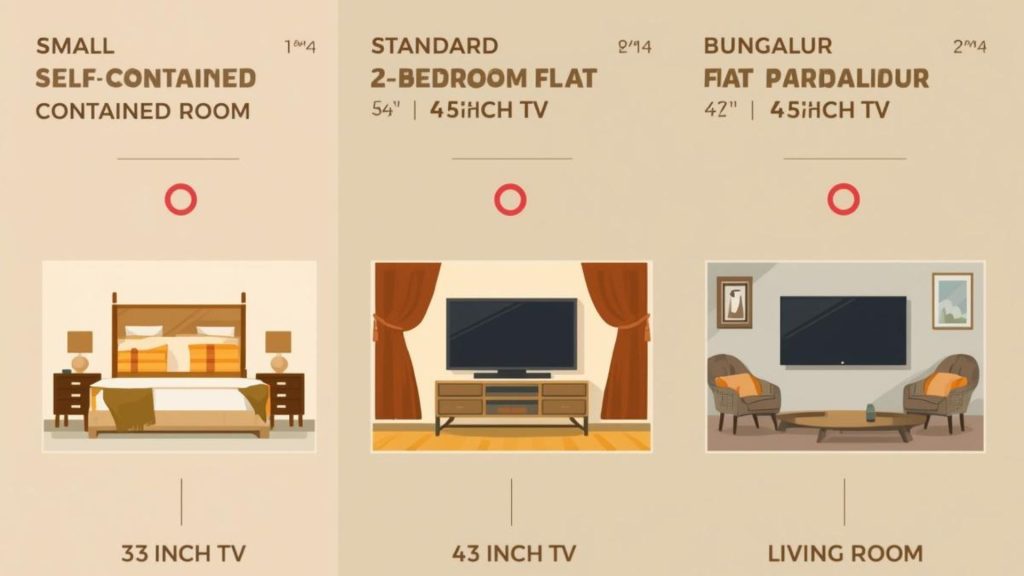
Not every Nigerian home is the same. Your room type should heavily influence your decision.
Self-Contained or Single Room (Face-Me-I-Face-You)
If you live in a self-contained apartment, a bedsitter, or a single room where your bed, kitchen, and sitting area share one space, a 32-inch to 40-inch TV is ideal. It is large enough to watch comfortably from your bed or chair without overwhelming the room. Plus, smaller TVs consume less power — a blessing when NEPA takes light and you are running on generator or inverter.
Standard Two or Three Bedroom Flat
This is the most common setup for middle-class families in Lagos, Abuja, Enugu, and Kano. Your parlour is likely between 12 by 12 feet and 15 by 15 feet. Here, a 43-inch to 50-inch TV fits beautifully. It is big enough for family movie nights and football viewing without making the room feel like a cinema hall.
Bungalow or Duplex Sitting Room
If you have a large sitting room in a family compound or duplex — especially one with high ceilings and generous floor space — you can comfortably go for a 55-inch to 65-inch TV. These sizes command attention and create that immersive home theatre experience your children and guests will love.
Outdoor or Veranda Viewing
Some Nigerians mount TVs on their verandas or in open-air bars and relaxation areas. If this is your plan, consider a 50-inch or larger screen with high brightness so the picture remains visible in daylight. However, ensure it is protected from rain and dust.
Resolution: Why 4K is the Sweet Spot for Nigeria
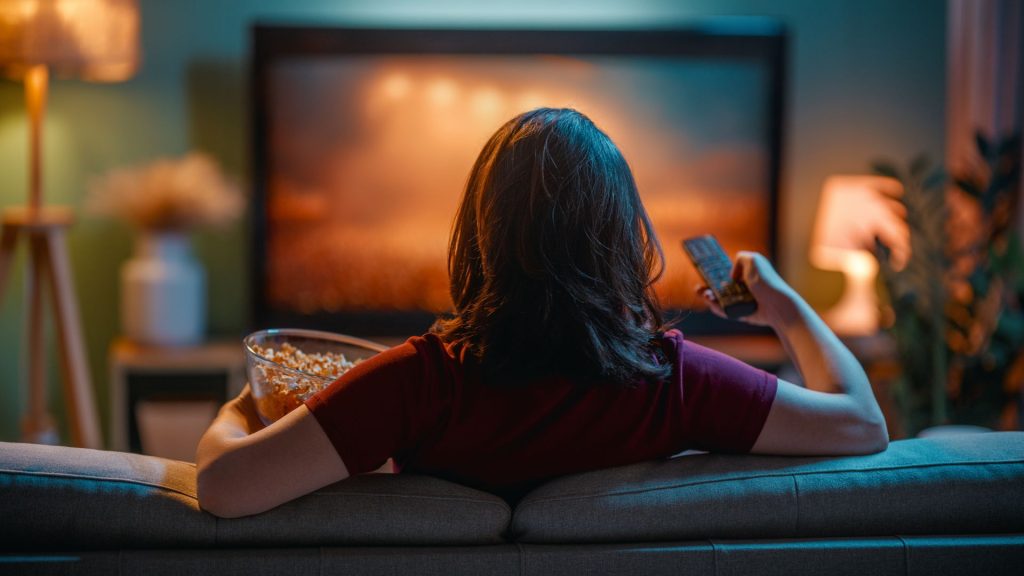
Screen size and resolution are best friends. You cannot talk about one without the other.
- HD Ready (720p) — Found mostly on 32-inch TVs. Acceptable for small screens, but details look soft on anything larger.
- Full HD (1080p) — Standard on 40-inch to 43-inch TVs. Clear and decent for most Nigerian broadcast content.
- 4K Ultra HD (2160p) — Four times the detail of Full HD. Available on 43-inch TVs and above. This is the sweet spot in 2026.
- 8K — Overkill for almost every Nigerian home. Expensive, and there is barely any 8K content available locally.
Here is the key point: the larger your TV, the more important resolution becomes. If you buy a 65-inch TV with only Full HD resolution, you will notice pixels and blurry edges when you sit close. A 4K TV of the same size stays sharp and lifelike.
Thankfully, 4K TVs have become affordable. Brands like Hisense, LG, and Samsung now offer 43-inch and 50-inch 4K models at prices that fit comfortably into a pay small small plan.
Power Consumption: The Reality Every Nigerian Must Consider
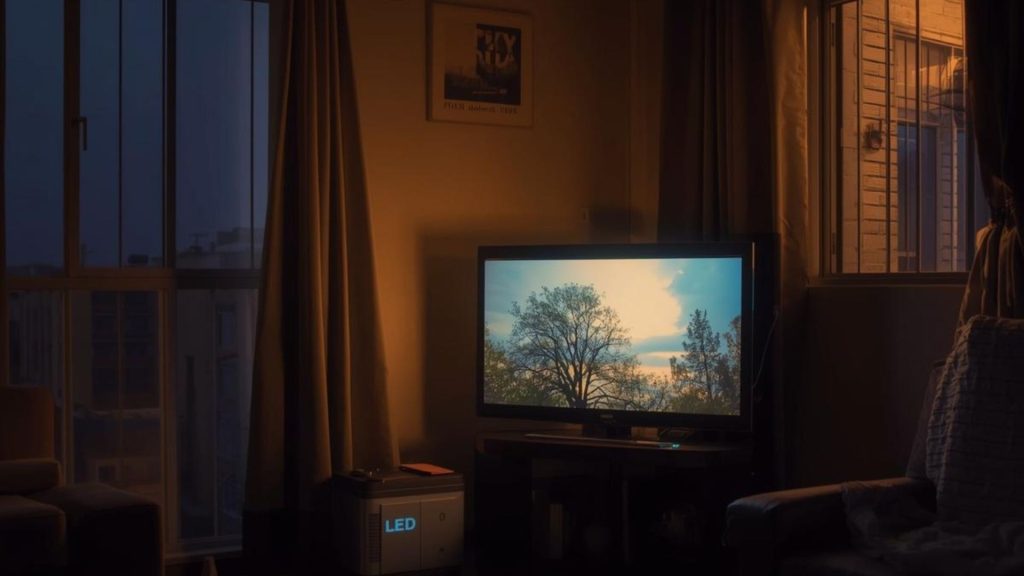
This is where generic TV buying guides from America or Europe fail us. They do not talk about power. We must.
Televisions are one of the most power-hungry appliances in your home after fridges, air conditioners, and irons. If you live in an area with frequent power outages — which describes most of Nigeria — your TV’s energy consumption directly affects your fuel costs and inverter battery life.
Modern LED and QLED TVs are far more energy-efficient than the old plasma and CRT televisions many of us grew up with. However, larger screens still draw more power than smaller ones.
- A 32-inch LED TV uses roughly 30 to 50 watts
- A 43-inch LED TV uses roughly 50 to 70 watts
- A 55-inch 4K TV uses roughly 80 to 120 watts
- A 65-inch 4K TV uses roughly 120 to 180 watts
If you run on a 1kVA inverter, a 32-inch or 43-inch TV will let you watch for hours without draining your battery quickly. A 65-inch TV, while stunning, will shorten your viewing time significantly unless you upgrade your power system.
Our advice? Match your TV size to your power reality. There is no shame in buying a 43-inch TV that your inverter can handle comfortably rather than a 65-inch monster that forces you to buy petrol every evening.
TV Brands You Can Trust in the Nigerian Market
Walk into any electronics market at Alaba, Computer Village, or Wuse, and you will see dozens of TV brands. Some are excellent. Others are questionable. Here are the brands worth your money:
Samsung — Premium build quality, excellent picture, and reliable after-sales service in major Nigerian cities. Their Tizen smart platform is smooth but pricey.
LG — A favourite among Nigerian families for decades. Great colour accuracy, durable panels, and WebOS is user-friendly. Their 43-inch and 55-inch models are especially popular.
Hisense — The value king. Hisense offers 4K smart TVs at prices that undercut Samsung and LG while delivering 85% of the performance. Perfect for pay small small buyers who want maximum screen for minimum deposit.
Sony — Outstanding picture processing and sound, but expensive. Best for videophiles and gamers who own PlayStation consoles.
Polystar, Scanfrost, and Syinix — Budget-friendly options with decent performance. Good for secondary rooms or starter homes.
Avoid no-name brands with suspiciously low prices. They often lack proper warranty support, and when the screen develops a line or the backlight fails, you will struggle to find spare parts.
Wall Mounting vs TV Stand: What Works in Nigerian Homes?
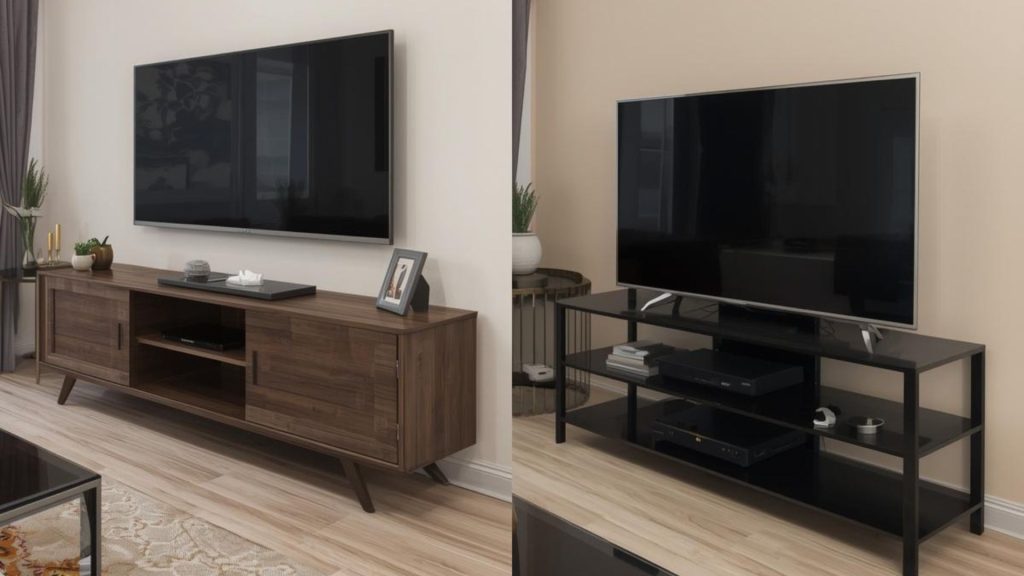
This decision affects your room layout and, surprisingly, how big your TV feels.
Wall mounting saves floor space, looks modern, and makes your TV the focal point of the room. It is perfect for small parlours where every square foot matters. However, if you rent your apartment, drilling holes might violate your tenancy agreement or anger your landlord.
TV stands offer flexibility. You can move the television easily, hide cables in the stand compartments, and you do not need to drill walls. The downside? They take up floor space and may limit your maximum TV size depending on the stand width.
If you mount on the wall, ensure the bracket is sturdy and professionally installed. Nigerian walls vary in quality — a cheap bracket on a hollow block wall is a disaster waiting to happen.
Common Mistakes Nigerians Make When Buying a TV
Learn from others so you do not repeat their errors.
Mistake 1: Buying based on price alone
That 75-inch TV going for a surprisingly low price might be a grey-market import with no warranty. Or worse, a refurbished panel dressed as new.
Mistake 2: Ignoring the room size
We get it. You want to impress your guests. But a 65-inch TV in a 10 by 10 room is not impressive — it is uncomfortable.
Mistake 3: Forgetting about smart features
In 2026, a non-smart TV is a wasted opportunity. You want built-in Wi-Fi, Netflix, YouTube, and screen mirroring so you can watch content without connecting a laptop or decoder box.
Mistake 4: Not checking the refresh rate
For sports lovers and gamers, a 60Hz refresh rate is minimum. Anything lower, and fast-moving football matches look blurry.
Mistake 5: Skipping the sound test
Modern slim TVs have terrible built-in speakers. Budget for a soundbar or home theatre system, especially if you buy 50 inches and above.
Our Recommendations by Budget and Room Size
To make this easy, here is a quick reference table:
Table
| Your Budget (₦) | Room Size | Recommended TV Size | Best Brands |
|---|---|---|---|
| 80,000 – 120,000 | Small room / Self-contain | 32″ – 40″ HD/Full HD | Hisense, Polystar, Syinix |
| 150,000 – 250,000 | Standard 2-bedroom parlour | 43″ – 50″ 4K Smart | Hisense, LG, Samsung |
| 280,000 – 400,000 | Large sitting room | 55″ – 65″ 4K Smart | LG, Samsung, Sony |
| 450,000+ | Duplex / Home theatre room | 65″ – 75″ 4K/QLED | Samsung, Sony, LG |
Remember: with pay small small, you do not need to save for six months before bringing home your dream TV. A small daily or weekly payment gets you watching immediately while you spread the cost.
Final Thoughts: Let Your Room Decide
At the end of the day, the best TV size is the one that fits your space, matches your power setup, and brings joy to your household without emptying your pocket.
Measure your room. Measure your viewing distance. Check your inverter capacity. Then choose a brand with a real warranty and a seller who delivers to your state.
Whether you are in a bustling Lagos estate, a quiet Calabar neighbourhood, or a family compound in Kaduna, the right television transforms your living room from just another room into the heart of your home.

Ready to Upgrade Your Living Room?
Now that you know exactly what size TV you need, it is time to shop. Browse our collection of smart TVs, LED TVs, and 4K home entertainment systems from trusted brands like Hisense, LG, and Samsung.
We deliver to all 36 states in Nigeria. And with our pay small small plan, you can choose to pay daily, weekly, or monthly until your TV is fully yours. No stress. No hidden charges. Just quality electronics made affordable.